Boruto: Two Blue Vortex Is Repeating The Naruto Next Generations Manga's Biggest Problem
Warning: The following contains spoilers for Boruto: Two Blue Vortex chapter #10!!
Summary Inojin's death in Boruto: Two Blue Vortex lacked meaningful setup, making it feel unimportant to readers.
The manga failed to give readers enough time to invest in Inojin's character before his sudden death.
The anime's ability to establish characters and their relationships highlights the shortcomings of Inojin's death in the manga.
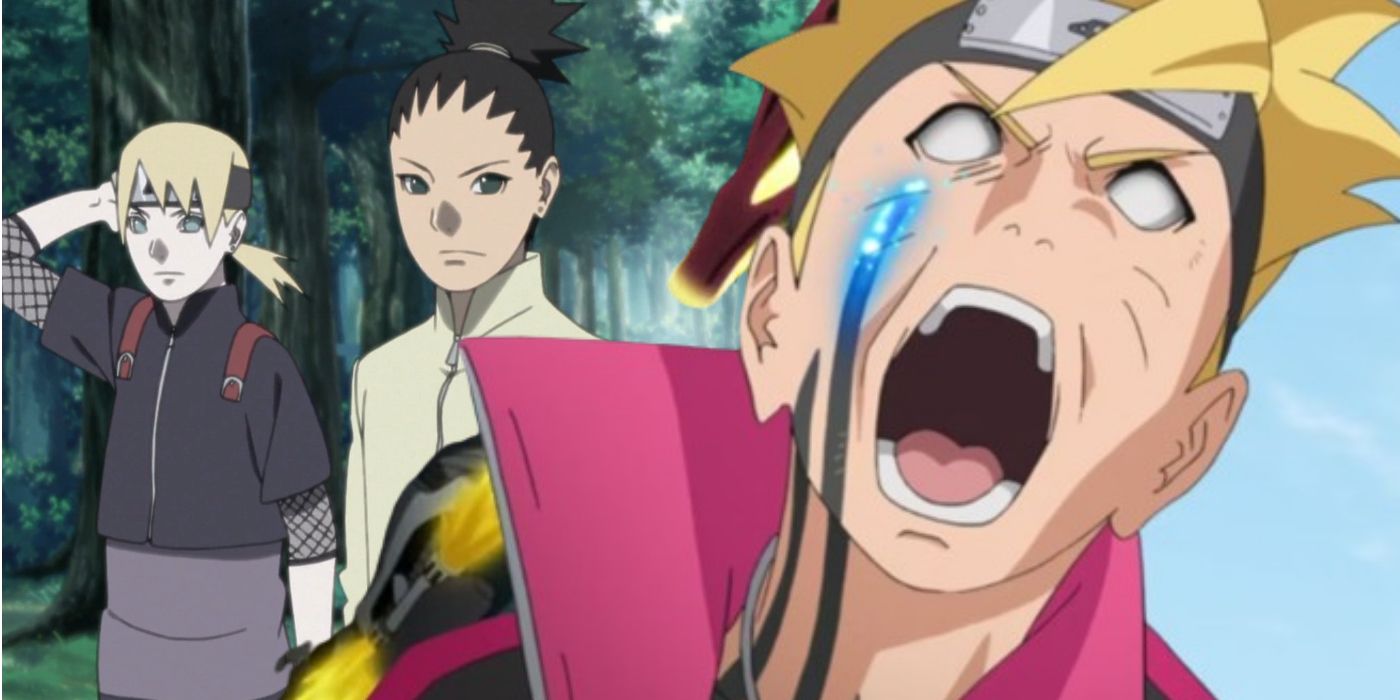
Some fans are understandably praising the ostensible albeit shocking death of Inojin in Boruto: Two Blue Vortex because he's one of the many supposed central characters who hasn't benefited from any relevant moments ever since his lackluster debut in the Naruto sequel. Yet, the overall delivery of his death unfortunately follows a disappointing trend that has been plaguing the manga ever since Boruto: Naruto Next Generations. Those who have explored Boruto beyond the manga are especially frustrated by this latest development in Two Blue Vortex, since they are aware of how effective character deaths can be, since the anime has remedied this very problem before.
At the end of chapter #10 in Boruto: Two Blue Vortex, team 10 randomly shows up to protect Himawari from Jūra and Hidari, whose pursuit of the unexpected reemergence of the Nine-Tails chakra brings them to her at Konoha. During the ensuing battle, Inojin is impaled, which leads to Himawari more effectively brandishing Kurama's power to attack her assailants and Inojin's murderers.
Although Himawari's reaction is notable, none of the previous nine chapters of Two Blue Vortex - let alone any of the 80 chapters of Naruto Next Generations which explored Inojin's character, let alone his relationship with Himawari to give his ostensible death more meaning.
How The Boruto Manga Fumbled An Earlier Death
Original series created by Masashi Kishimoto & Mikio Ikemoto
This disappointing scene undoubtedly reminds anime viewers of how the anime remedied Mugino's wasted death in the manga. In chapter #16, Mugino finally receives his first big moment when he takes part in a mission with Konohamaru to investigate a fallen Kara vessel. And yet, it doesn't take long before Mugino is suddenly killed by the shinobi Ao. This already short amount of lead-up time to his murder was diluted further by how the manga failed to devote the entirety of a single chapter to Mugino's short story. Instead, it shared precious pages with scenes at Sumiere's Ninja Scientific Tools lab when Boruto was visiting there.
Even worse, Inojin and Himawari never really interact in the anime, which makes his sacrifice for her sake even less meaningful.
Although there's a heartbreaking moment when Boruto reacts to Mugino's death, readers weren't able to undergo anything remotely as emotional, since the manga had failed to give them enough time for Mugino to get fully invested in his character and subsequent death. Although manga readers may have felt indifferent when Ao killed Mugino, those who also saw the anime adaptation quickly realized how much the manga had wasted Mugino's death.
In comparison, Mugino's murder in the anime was not only preceded by numerous missions with him, but a whole episode was devoted to his character, entitled "The Assassin, Mugino", during which time Boruto finally sees him as a human being as opposed to just one of his annoying superiors. Boruto soon learns that Mugino has made some poor life decisions, which becomes clearer when Boruto sees his underwhelming living arrangements, and is later tasked by Mugino with taking care of one of his pets until he returns from a mission.
That mission just happens to be the one that he later dies during. Understandably, these touching moments helped viewers actually care when Mugino dies soon afterward, since his life had been so empty and therefore put Boruto's reaction into much-needed context. Moreover, the anime later expands upon this whole situation when Boruto must deal with Mugino's pet, who is now without an owner, and a home that is somehow emptier than before.
What Boruto's Past Deaths Mean for Inojin
How much more anime-viewers experience in relation to the manga and, likewise, the amount of nuance that is lost in the original source material helps contextualize just how lacking Inojin's death is in the latest chapter of Boruto: Two Blue Vortex. It's odd that the manga doesn't give Sai and Ino's son at least a few pages in chapter #10 before he jumps in to save Himawari from Jūra and Hidari before getting impaled. But it would have been even more beneficial if the previous chapter had followed his character more closely to help establish his later importance.
And yet, in another bizarre development, even anime viewers aren't able to effectively connect any crucial scenes from the vastly more extensive back catalog of the anime to his death in the manga to help give it some meaning
In another bizarre development, even anime viewers aren't able to effectively connect any crucial scenes from the vastly more extensive back catalog of the anime to his death in the manga to help give it some meaning. There are a plethora of other instances where anime viewers have been able to more effectively enjoy or appreciate major scenes in the manga that go unnoticed by those who haven't seen the anime.
One of the most recent and relevant examples is when Boruto tells Mitsuki that he is his sun during an emotional battle in chapter #7 of Two Blue Vortex. Although the debut chapter helped add a little bit of context to the conversation for readers, it greatly pales in comparison to Mitsuki's search for his sun in the anime, which is perplexingly ignored in the manga completely.
Some fans who want to find some connections from the anime to Inojin's death in the manga might turn to the Mind Body Switch Technique that he learned from his mother Ino in episode #140. But, even then, this doesn't feel relevant or add anything to his death, especially since Ino isn't even present during the battle. However, it could explain how he might survive if Inojin is able to use the jutsu to successfully remove himself from his own body to possess another indefinitely.
Even worse, Inojin and Himawari never really interact in the anime, which makes his sacrifice for her sake even less meaningful. It might have well been just a no-name ninja who sacrificed themselves for Himawari. Regardless, Inojin's sudden death doesn't somehow fix how much Boruto: Two Blue Vortex and Naruto Next Generations have misused his character just because his murder doesn't feel particularly special or even sad.
Boruto: Two Blue Vortex




COMMENTS