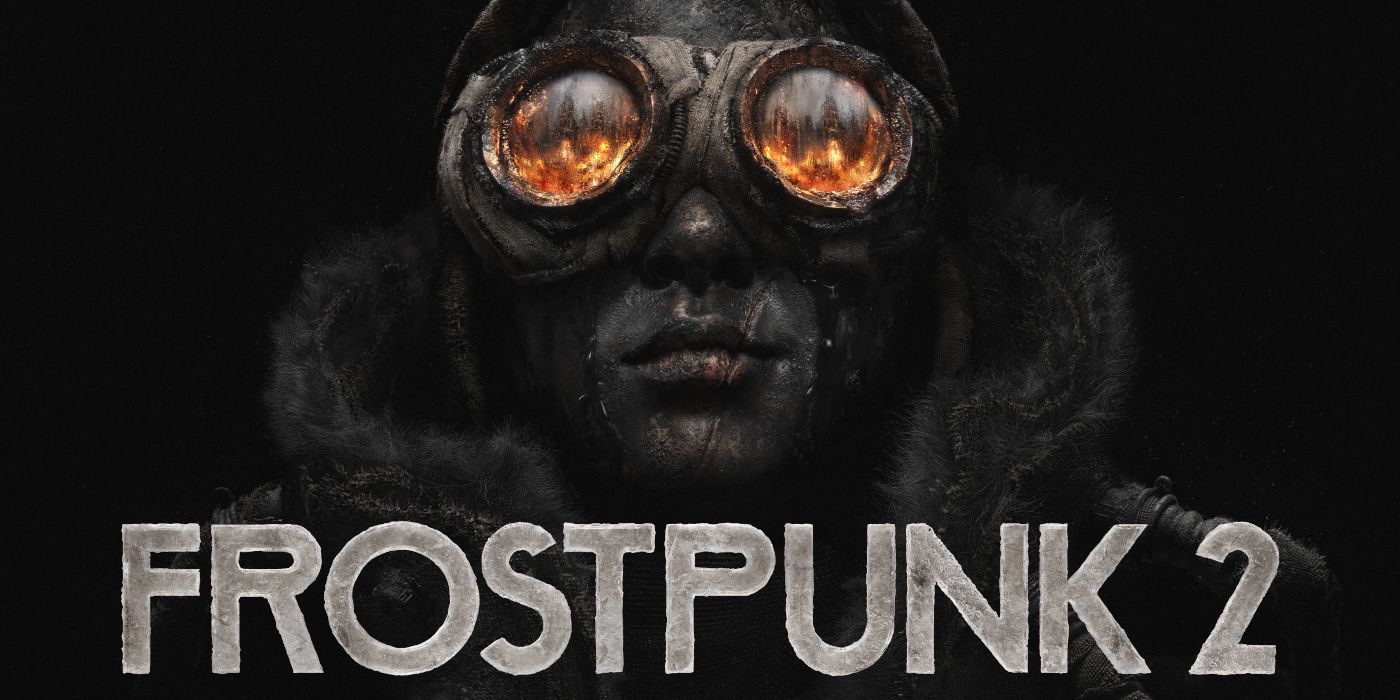
Frostpunk 2 Is The Epitome Of A Divisive Sequel & It Could Be The Best Because Of It: Preview
Summary Frostpunk 2 overhauls original game's bleak foundation, streamlining resources and adding the Council system.
The new game emphasizes social design, democracy, city expansion, and policy craft to accelerate resource management.
Players must adapt to new currency Heatstamps, revamped city construction, and the intricacies of the Council system.
Frostpunk 2 is not another iterative sequel, but a detailed overhaul of the foundation which made the original game so relentlessly bleak and mechanically challenging. As a distressing choice-driven adventure game masquerading as a city-builder/survival experience, 11 Bit Studios’ Frostpunk tumbled genre expectations on release, tasking players with the construction, maintenance, and expansion of an increasingly complicated urban stronghold in the dead of a volcanic winter. Frostpunk 2, for better and possibly for worse, amplifies the original’s thesis while discarding a few vestigial aspects; frankly, this is the epitome of a divisive sequel.
The original Frostpunk mustered many plates spinning in tandem, with players overseeing a range of collectible resources and nested needs, from the micro to the macro (with emphasis on the former). Children could be put to work in dangerous conditions, the injured left to perish in the absence of adequate medical facilities, all while work hours stretched to the breaking point. This all occurs while the frigid weather wavers, turning unprotected homes into bastions of death and disease, dumping dwindling coal reserves into an overloaded engine at the center of the city for a costly but necessary respite.
Related Frostpunk 2: Release Date, Story & Edition Differences The release date, story details, editions, and prices for Frostpunk 2 have been officially revealed. Here’s everything you need to know.
Some of these ideas have been ported over to the sequel, but Frostpunk 2 makes the contentious point of streamlining multiple points of interest which once required careful attention. Paring those down, hastening the flow of time, and pushing the narrative decades into the future, players find that survival has changed and the people want for more order and structure alongside their daily bread, with social design and budding democracy amplifying their voice, more influential now than ever before.
Simplifying A Simulation's Busywork
Frostpunk 2 Streamlines The City-Building, Ramps Up The Social Systems
Close
Part of the new structure reads like a commentary on humanity and the adaptability of the social organism. On how, even in a freezing environment where life is not promised, the drive by the ones who survive for order, reason, and the structural dimensions of the future becomes its own precious resource, its own kindled flame. At the onset of Frostpunk 2, it appears that the masses are no longer simply taking orders, but now attempting to forge a better vision of their world.
For players, this introduces the Council system, an emergent democratic organ comprised of individual representatives of New London – yes, the original city from the first Frostpunk campaign persists, some 30 years later – and the heads of various factions. No longer can players simply decree new laws and policies, now needing to sway public opinion through a variety of methods, adding a detailed social mechanic that is probably the sequel’s most significant addition to the basic Frostpunk flow.
If our preview taught us anything, it’s that any doubts and misgivings about the differences in the sequel should at least be reserved until engaging the story scenarios further, which we found engagingly immersive and best-in-class for the genre.
Frostpunk 2 also simplifies both city construction and the gathering of resources considerably. In the original, food, metal, wood, coal, and even rare steam cores all had utility and taxing methods of pursuit, typically as raw building materials or nutrition for citizens. Players would routinely send hunters out to painstakingly gather food – which then had to be processed for maximum sustainability and efficiency – and wood/metal requirements shifted around during play, leading to circumstances where research and construction were halted for lack of one or the other.
The new game unsurprisingly maintains a resource grind as a core mechanic, but is more reliant on city expansion and policy craft to accelerate the rate of accrual and manage reserves. Eschewing the original’s ring-based heat concept, the new game doesn’t even feature a thermal map to view, with heat its own distributed resource, and expansion a matter of “frostbreaking” hex-based ground tiles before building any districts and facilities therein.
The New Wintry Urban Sprawl
Frostpunk 2 Shatters The Almighty Circle
In the first scenario we played, explorers come upon a dreadnought – a train-like land vehicle formed around a massive engine – spiked across a crevasse and embedded in the snow and ice. Players chop up the surrounding hexes and convert them to districts for housing, manufacture, and farming, and can then draw oil – a new heat resource, though coal also makes an appearance – from several nearby abandoned tankers to refuel the dreadnought’s genny.
Frostpunk 2’s updated art style is able to better express the new sense of mechanical and thematic scale, but it also sacrifices a bit of the first game’s zoomed-in intimacy. It’s just as beautiful, if not more so, but there also appears to be a farther standardized camera distance, arguably necessary when considering how sprawling the maps can become.
Related "An Enjoyably Intricate City Planning Game" - Cities: Skylines 2 Review While Cities: Skylines 2 doesn’t have the decade of DLC yet, it is a stunning city management game that is exactly what it should be right now.
No longer restricted solely to a central wheel-and-spoke city plan, maps stretch out and elongate into odd directions. The scenario’s dreadnought lies over a frozen river, and city expansion can penetrate around and even underneath the great machine. Events can be found on the explorable region map, but also within city limits themselves; at one point, we stumbled upon a pack of seals, and had to decide whether to cull them for a food boost or protect them against extinction.
Frostpunk 2 Changes The Game...Significantly
Frostpunk 1 Fans Will Have A Lot to Learn With The Streamlined Systems in the Sequel
Some of the above statements will leave Frostpunk 1 fans aghast. 11 Bit Studios made several coarse adjustments to their systems, completely changing how the central simulation works and where attention needs to be focused. In our preview, this translated to about an hour of, “Wait, how does this work?” Often followed by, “Why can’t I click on or build this already?”
For the latter, some of the confusion is thanks to a brand new, considerably abstract currency known as Heatstamps. This value isn’t directly tied to mining or manufacture, but more like a representative GDP of a given Frostpunk 2 city. It can be hoarded or blown all at once, its rate can be adjusted by taxing the populace or pitching new policies, and anticipating its accrual and figuring out when best to spend it is admittedly nebulous at the onset.
[Frostpunk 2's gameplay] ultimately makes sense – why install a refinery in a housing district? – but it’s not well explained by the UI or tutorials.
This, along with a few other quirks and changes in Frostpunk 2, eventually became more intuitive, but it can make the very early game feel like blindly touching walls. It took us no less than ten minutes to figure out that new facilities must be placed within their related districts, so long as these are sufficiently developed to allow them. It ultimately makes sense – why install a refinery in a housing district? – but it’s not well explained by the UI or tutorials, joining several other new elements which do not feel second-nature to the series.
Sway and Serve The Will of the People
Frostpunk 2's Council Completely Changes How The Game Works
Luckily, Frostpunk 2’s most daring new change is the addition of Councils, which sneakily develops into both a mechanical pillar and an ingrained tutorial system. Once representatives are sourced and Councils manifest, players will have to engage these congressional chambers to modify policy or enact entirely new rules and laws, from the minor to the all-encompassing. Listening to community needs can also steer players towards broader and more impactful goals, in a way that comes off as brilliantly obscured hand-holding, but also hints at a level of inspired depth.
In play, this engages a formal negotiation, where majority votes can be predicted, pointing to the increasingly numerous political factions who require appeasement for desired policies to pass. Agreeing with their demands and getting factions to vote sympathetically is a great way to tease and explain Frostpunk 2’s approaches and ideas; more often than not, we agreed to their terms and better understood why certain changes should be applied, or that they were even available to enact.
Related The Alters Is So Much More Than A Game About Clones: Our Preview The Alters features gameplay ideas and sci-fi concepts to spare, but its emotional core elevates the project, which comes out later this year.
At first, the Councils system appeared like a bonus, possibly even frivolous layer on top of the game, but it gathered more weight as we delved further. Factions develop organically from cities or even introduce themselves to a player directly, becoming a primary Frostpunk 2 event. This also means that the personal stories in the original where citizens approached the Captain with their needs have been largely eradicated. These "ghosts" (as they are commonly known) still manifest in response to player choices in the game, but are usually noninteractive, while some important decision-based events can appear in response to the story.
Final Thoughts on the Preview
A Divisive Sequel That Doesn't Hide Its Ambition
Many fans of the series have already dipped their toes in the limited Frostpunk 2 betas which have arisen on the road to launch. If our preview taught us anything, it’s that any doubts and misgivings about the differences in the sequel should at least be reserved until engaging the story scenarios further, which we found engagingly immersive and best-in-class for the genre. The exploration and city expansion, the narrative feedback loop of the personal stories of the populace, and the min-maxing thoughtcraft of the original are all present and accounted for; it’s primarily the attention to minutiae that’s changed.
And yet, that represents the stuff of city-builders. Both Frostpunks are essentially narrative games about a punishing world of murky morality where each choice can kill swaths of the population, but the methods of interaction are architecture, city engineering, rationing, riots. Frostpunk 2 is betting on this underlying idea being understood and that its players feel thankful for any streamlining therein, but it’s understandable that diehards with hundreds or thousands of hours in the series could feel slighted by the sequel’s core changes to the flow.
Related 10 Best City-Building Games To Play Right Now The amount of strategy and creativity that comes in city-building video games gives players a truly engaging experience, as well as fun!
The first Frostpunk could be understood as the trees to Frostpunk 2’s forest, something hinted at in the player role; previously a Captain, the central commander here is now the Steward. No longer a dictatorship, cities are now massive multifaceted creations unable to turn on a dime at a simple order, needing to be sympathetically pushed onward to a targeted future. In Frostpunk 2, the Captain is dead – the people rule.
Screen Rant was invited for a hands-on event of Frostpunk 2 for the purpose of this preview.







COMMENTS