The Rogue Prince of Persia Is Still Looking For Dead Cells' Brand Of Magic
Summary The Rogue Prince of Persia remixes familiar roguelite elements but lacks content and novelty.
The game lacks tangible growth due to a limited armory and lack of permanent upgrades, compromising its roguelite promise.
The Prince's platforming tricks, like wall-running, add an engaging layer to the gameplay, but enemy variety feels cheap.
Indie studio Evil Empire secured a legacy with its first release: the magnificent and best-selling Metroidvania roguelite Dead Cells. Teaming up with Ubisoft for the cumbersomely-titled The Rogue Prince of Persia, the new collaboration is essentially a reskinned and rebranded version of their debut patterned after the long-running adventure franchise. With its animated presentation and greater focus on platforming, The Rogue Prince of Persia remixes predictable roguelite elements – item unlocks, replayable structure, a narrative which develops over subsequent runs – but is notably underweight on content and novelty, even for an Early Access product.
Dead Cells first struck when the roguelite iron was hot, and the sales numbers followed. Players took on the role of The Prisoner, a kind of mold mass tethered to a limitless supply of corpses, and forged through dangerous biomes packed with monsters, weapons, and tools to find. The 2D perspective and exploration mechanics fit the game squarely in the Metroidvania mold, and a slew of unlockables ensured that each randomized run felt distinct, along with its alternate routes, puzzles, bosses, and permanent upgrades.
Related 10 Best Roguelike Games Right Now Beyond creating a debate over definition that has spanned years, roguelikes are also staples in gaming. Here's the 10 best roguelikes right now.
The Rogue Prince of Persia boasts a similar approach, but the Prince at its center is much more nimble than The Prisoner. Levels are similarly random here, but combat is simplified and tuned down, with greater priority placed on deadly platforming challenges. There are no permanent upgrades to track down outside a few weapons and trinkets, nor any additional movement abilities or power-ups. This drains any sense of tangible growth from later runs, which compromises its roguelite promise and makes the amalgamation of these two franchises feel skin-deep at best.
A Few Bits and Baubles For Weapons
The Rogue Prince of Persia's Limited Armory Holds it Back
Close
The notion of combining a roguelite with The Prince of Persia’s longstanding time-manipulation conceit is an obvious gimme. There’s little setup required or presented for the core idea of The Rogue Prince of Persia, just that Prince is trying to save his village from the onslaught of the Huns, and his magic bola necklace empowers him to retry after every failure, sending him back to an oasis hub area populated by a growing assortment of NPCs and upgrade stations.
Fundamentally, though, there are a mere two at this point in Early Access: a blacksmith named Sukhra who unlocks weapons and Paachi, a mysterious masked trinket dealer. Any collected Spirit Glimmers – a purple currency found as a rare pickup or by defeating certain enemies in combat – can be banked at braziers in each level and then spent at these stations after first encountering a given item in the game. There are eight primary weapons to find, a few secondaries, and dozens of trinkets imparting various buffs and elemental triggers, and four can be equipped at a time.
Besides this somewhat strange system, The Rogue Prince of Persia inserts the Prince’s tried and true wall-running ability into the 2D gameplay.
Weapons have a single combo and charge attack apiece, and they are neither very different from one another nor interesting on their own. These bear no potential elemental affinities or randomized effects, though a rare blacksmith NPC found in certain levels can upgrade their damage in exchange for gold. The weapons utilize individual timing and attack delays, which are arguably more important than their purported DPS, with slower weapons opening up the Prince to inescapable damage from the quicker mobs.
Trinkets are a little more interesting, with type and belt placement changing how they upgrade any others on hand. For instance, one trinket can have an unlockable healing buff, but this will require it be upgraded to level 2; finding a trinket that upgrades adjacent trinkets by one point and placing it next to it can then render it more useful. Unfortunately, these cannot be swapped around once fastened, only destroyed by installing new trinkets in their place.
The Prince's Platforming Tricks
Wall-running Works Wonderfully in 2D
Besides this somewhat strange system, The Rogue Prince of Persia inserts the Prince’s tried and true wall-running ability into the 2D gameplay, with a quick press of R1 allowing players to scamper across background walls in any direction or just maintain their flow of movement. This isn’t infinite, of course, and the Prince will run out of gas near the end of a wall-run, from which point he can jump or briefly dash to catch more air.
It's a fun mechanic that factors into the trickier jumping puzzles, though it requires confident understanding and anticipation of the environment; some levels or boss encounters may remove background walls at certain points to decrease access, and walls can suddenly terminate just above spiked pits. It's clever and unusual 2D parkouring gameplay, even though the game also presents that common snag of unintentionally “sticking” the character to nearby walls, which results in more than a few fudged leaps.
Dead Cells At Work! Too Much!
The Amount of Reskinned Dead Cells Enemies in This Game is Too High
Enemies factor into the platforming as well, often placed around environmental hazards or each other, or positioned perfectly to interrupt the Prince in his stride. Sadly, enemy variety is limited and, more notably, seems almost entirely drawn from Dead Cells’ bestiary. There are versions of Grenadiers, Buzzcutters, Lancers, and Inquisitors in The Rogue Prince of Persia’s EA release, reskinned and functionally identical to those found in the previous game. It’s hard for this aspect not to come off as cheap, even with the Prince’s toolkit considerably different from that of The Prisoner.
They all also go down in just a few hits, with even larger hordes never more than a nuisance. They can be stunned with a kick but – as the Prince’s dash lacks any i-frames – they frequently steal cheap hits when jumbled together. A quick press of the B button can safely launch the prince over an enemy, but it’s tricky to engage when fighting multiple mobs, and it provides no defense against projectiles.
The two [boss] fights feel virtually identical over repeated runs.
The two sole bosses presently available in EA present more involved encounters, with the first a standard first-boss-in-a-roguelite intro exam and the second a sorcerer with an interesting move-set and some cool environmental twists. Unfortunately, since inherent DPS cannot be permanently increased nor are any new abilities made available, the two fights feel virtually identical over repeated runs, sans any blacksmith damage upgrades.
A Colorfully Vibrant Aesthetic
The Rogue Prince of Persia Looks Great in Motion
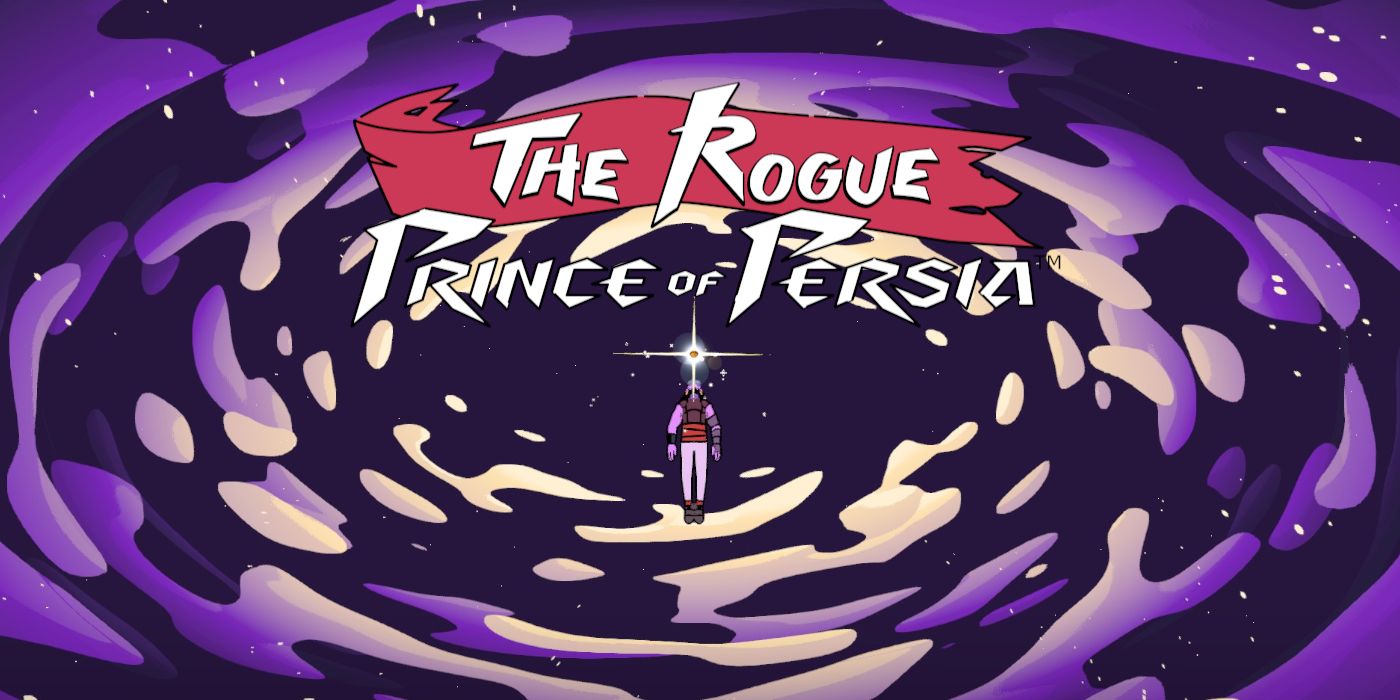
The Rogue Prince of Persia’s visual presentation is attractive and unique, though optimization seems scattershot at this point. Utilizing an animated aesthetic drawn from Franco-Belgian comics and historic Persian miniatures, the pinkish-purple-skinned Prince and other NPCs look distinct, with lots of physicality and personality for the main character. Certain levels like The Garden stand out for their vibrant beauty on a large screen with max settings.
Make sure to turn off Vsync if character movement feels too stuttery.
The story is a little underbaked at this stage of Early Access, and incidental NPC dialogue at the oasis runs out of steam after only a few visits. There’s a mechanic called a “Mind Map” in the start menu where players can look at longer-tailed puzzles and track progress, presented as a constellation with connected events and updated over time, but this feature is hardly necessary, and there’s barely anything to keep track of at this stage.
Final Thoughts On The Early Access Preview
The Rogue Prince of Persia Needs More Work Still
As it stands, The Rogue Prince of Persia has a few good ideas about agile roguelite platforming, a terrific soundtrack composed entirely of Persian trap music – thanks to the direct involvement of Asadi, the genre’s progenitor – and a beautiful visual aesthetic. For longtime fans of the franchise through all its reboots and reincarnations, the game feels like a suitable addition to the family, even in its current unfinished state.
The cynic, however, will remark on the game’s obvious reworking of Dead Cells with precious little to add to the stew. The lack of weapon variety could be related to its orientation towards platforming, but the absence of additional platforming abilities to unlock or upgrades to work towards doesn’t help support the argument. Roguelites need treasures to compel players for “just one more run,” and there’s barely anything here to offer in that respect.
It's hard times for Metroidvania lovers of this series, with The Prince of Persia: The Lost Crown’s rumored sales numbers making it vital that this genre find a hit within the franchise. Dead Cells’ legion of fans are probably primed as day-one purchasers of this new branded follow-up, but those same folks will scratch their heads at the shallowness of content and the similarities found therein. The Rogue Prince of Persia speaks to the character's nimble roots, but this new entry is still looking for its magic.
A digital PC code was provided to Screen Rant for the purpose of this preview.




COMMENTS