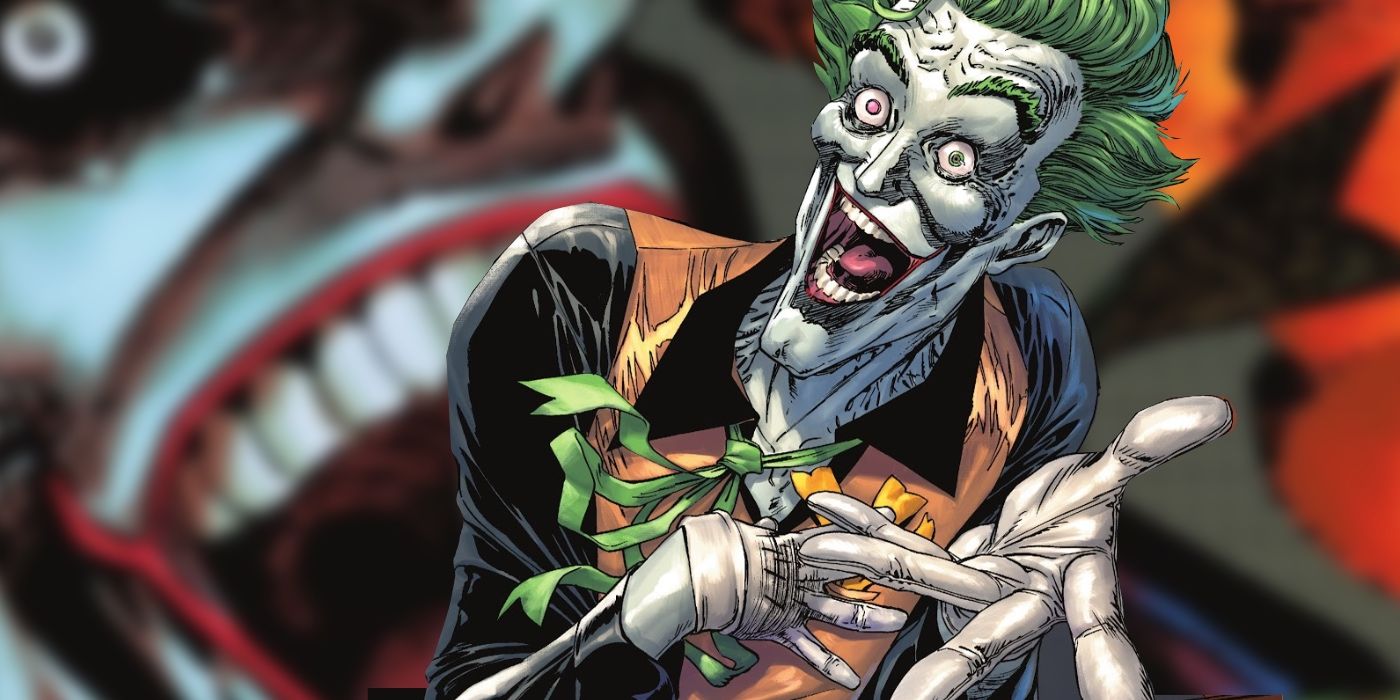
"I'm So Sorry": Joker's Failed Shot at Redemption Makes Him Way More Tragic (& Terrifying)
Summary Joker's encounter with Spectre in The Spectre #51 forced him to feel remorse for his actions, showing a potential for redemption, however slim, exists within comics' most chaotic character.
Spectre granted Joker moral clarity, leading to the villain being overwhelmed with regret and even going catatonic, proving he isn't inherently evil – but rather that he can't differentiate between good and bad.
Joker's inability to distinguish between good and evil makes him tragic; DC has suggested several times that if permanently cured, he'd never commit another crime.
The Joker is one of the most vicious, violent characters in DC Comics – but even he has been given hints of a possible redemption arc over the years. As unlikely as it seems, one story in particular showed that the Joker truly does have the capacity to feel remorse for his actions, even if it is usually buried by his insanity.
The Spectre #51 – written by John Ostrander, with art by Tom Mandrake – featured the heaven-sent hero's encounter with DC's most empirically evil antagonist. Using his god-like power, Spectre forced Joker to have a conscience, and it immediately caused Joker to be overwhelmed with regret for his villainous actions.
At different points in the character's history, DC has alluded to a side of Joker that recognizes the horror of his actions – with this Spectre story being one of the most over pieces of evidence.
Part of what made [The Spectre #51] so consequential was that prior to granting the Joker moral clarity, the Spectre confirmed that the villain cannot distinguish between right and wrong in his normal state.
Related DC Turned Joker into a Hero by Rewriting the Origin of His Scars The Joker has a very unique look, and DC took one of his most memorable features and changed it to give him a shockingly heroic origin.
The Joker With A Conscience Is More Disturbing Than Without
The Spectre #51 by John Ostrander, Tom Mandrake, Todd Klein, Carla Feeny, and Digital Chameleon.
Close
In The Spectre, after being forced to understand the difference between good and evil, Joker wound up crying on the floor, so torn apart by the evil actions he had been responsible for that he went catatonic. This reaction was significant, because it proved that the Joker isn't just inherently evil, which makes him all the more tragic. Part of what made the story so consequential was that prior to granting the Joker moral clarity, the Spectre confirmed that the villain cannot distinguish between right and wrong in his normal state.
While dozens of psychiatrists have failed to properly diagnose Joker over the years, the Spectre's powers granted him metaphysical insight into the Clown Prince of Crime's condition. This makes it one of the most definitive stories about the Joker's psyche. Made to feel the difference between right and wrong, the seemingly irredeemable evil of the Joker immediately shattered, leaving a man overwhelmed by this reckoning with his actions. As a result, The Spectre #51 is an unexpectedly vital key to understanding DC's most chaotic character.
Joker simply being evil is far too simple. He's not evil; rather, he cannot distinguish evil from good. His actions are born from the fact he has no sense of morality.
DC Has Pulled Back The Mask Of Joker's Insanity Several Times
JLA #15 – Written By Grant Morrison; Art By Gary Frank, Howard Porter, Greg Land, John Dell, Bob McLeod, Pat Garrahy, & Ken Lopez
The Spectre #51 wasn't the first time that Joker had been rendered sane either. In JLA #15, Martian Manhunter used his powers to rearrange Joker's mind, restoring his sanity. At this moment, Joker immediately expressed massive amounts of guilt for what he has done. As Spectre explained, Joker simply being evil is far too simple. He's not evil; rather, he cannot distinguish evil from good. His actions are born from the fact he has no sense of morality. Which is significantly more complex and tragic than Joker being a creature of pure evil.
It is easy to write Joker off as just an unreasonable, chaotic monster, who does evil things for the sake of being evil. However, the actual reality is far more complicated. Instead of being a man who just wants to be evil for the sake of it, he's a man who cannot be evil, simply because he can't understand good. The tragic part of this is that if Joker was ever permanently cured, he'd never commit another crime. It is only the fact he's so insane that he's a monster, which is what makes Joker a truly tragic character.





COMMENTS