The Controversy Surrounding The Tattooist of Auschwitz Explained
Summary Not all details in The Tattooist of Auschwitz are accurate, leading to controversy over its portrayal of the Holocaust.
The love story in the show is based on true events but may have been embellished for dramatic effect.
Family members of survivors have criticized the novel for historical inaccuracies, questioning the overall authenticity.
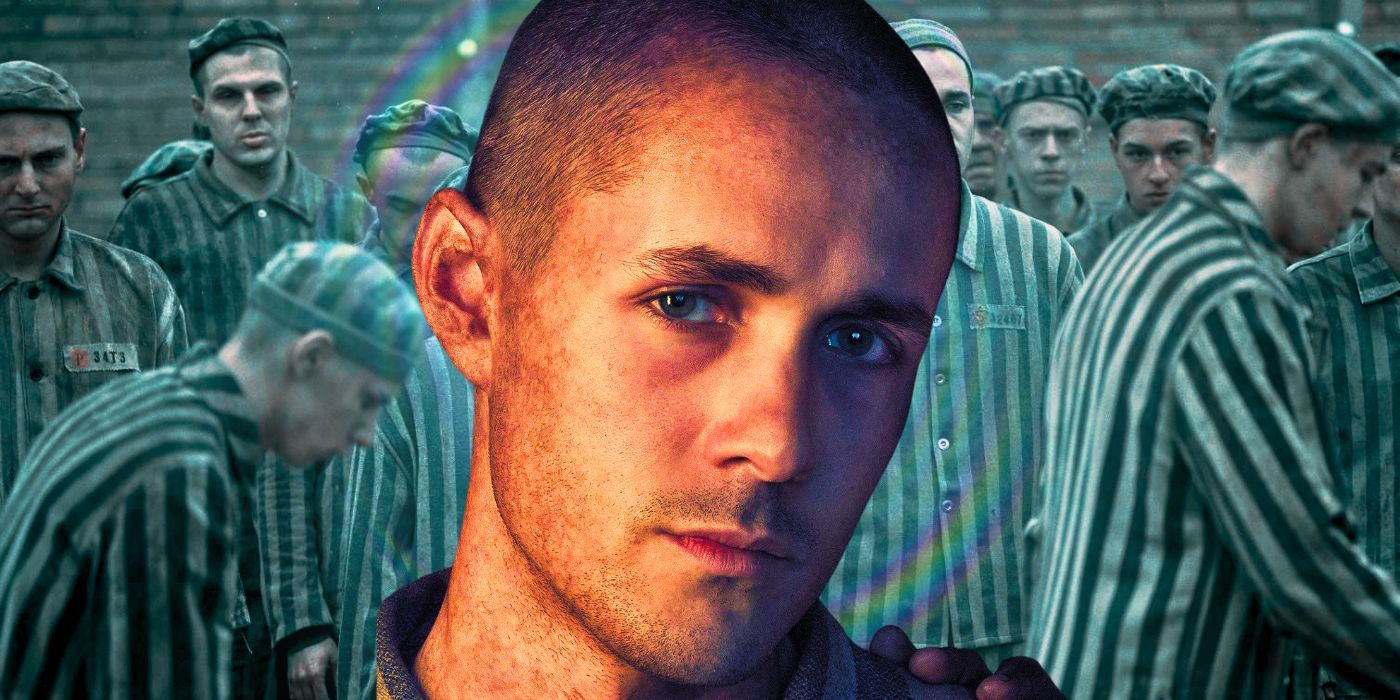
Peacock's new historical drama The Tattooist of Auschwitz chronicles a beautiful love story set against the horror of the Holocaust, and while it's built upon the memories of the real Holocaust survivor Lali Sokolov, its source material's status as historical fiction has yielded controversy since its publication. The show is based on the novel of the same name from 2018, written by New Zealand novelist Heather Morris after three years of conversations with the real Lali Sokolov and more than a decade of ensuing research.
While Morris has never claimed the novel to be anything more than historical fiction, it has been the subject of controversy ever since it was released in 2018. It has come under scrutiny from the Auschwitz Memorial Research Center, which has since confirmed that many of the details, from small location changes to the inclusion of events that would have been nearly impossible, make the novel an unreliable source for those who wish to understand Auschwitz from 1942-1945. The Tattooist of Auschwitz's ending adds some context to the events of the show, but doesn't elaborate on the controversy.
Related The Tattooist of Auschwitz Cast & Character Guide The harrowing biographical drama The Tattooist of Auschwitz features outstanding performances from both familiar faces and relative unknowns.
The Tattooist Of Auschwitz Has Been Criticized For Being Misleading
It's based on a survivor's real memories, but still part-fiction
Close
The main point of controversy surrounding The Tattooist of Auschwitz is the fact that it can be viewed as misleading. As both the novel and the show claim to be based on a true story (and in fact, are), it has led to confusion that every element in it is completely true. As Heather Morris tells it, the novel is roughly 95% based on Lali's memories and verified by research, while she did put Lali and Gita in situations that they were not in.
All episodes of The Tattooist of Auschwitz are now streaming on Peacock.
However, as the book and show are based on the memories of a prisoner more than 50 years after they occurred, it's almost certain that events have been misremembered and, in some cases, embellished or altered. It also can be considered misleading in the way that its focus on Lali and Gita's love story romanticizes the camp. While it in no way shies away from the atrocities committed in Auschwitz, The Tattooist of Auschwitz does alter some of the realities of the camp in service of the dramatic love story.
Key Details In The Tattooist Of Auschwitz Have Been Proven Wrong
Some significant elements of the story were exposed
The Auschwitz Memorial Research Center in particular has discovered a number of significant factual errors in The Tattooist of Auschwitz, and while some of them seem trivial, they all contribute to the painting of an inaccurate image of the Auschwitz concentration camp. The Auschwitz Memorial has condemned the novel, and said that it can not be viewed as an accurate representation of what life in Auschwitz was like during the time that the real Lali Sokolov was imprisoned there.
The Tattooist of Auschwitz Character Played By Lali Sokolov Harvey Keitel Young Lali Sokolov Jonah Hauer-King Gita Fuhrmannova Anna Próchniak Heather Morris Melanie Lynskey Jonas Nay Stefan Baretzki
Many of the events in the book and show either can't be confirmed, or are highly unlikely to have occurred based on the verifiable information known about Auschwitz. For example, the horrifying scene in which Stefan Baretzki, the Nazi SS guard in charge of Lali, shoots three prisoners as they use a latrine, would be highly unlikely given its randomness. In reality, the Nazis were highly regimented in their documentation of prisoners, so a random killing resulting in abandoned bodies is highly unlikely.
What Family Members Of The Survivors Have Said About The Tattooist Of Auschwitz
The original novel came under scrutiny from survivors' children
Other key details have been called out specifically by family members of the survivors, further contributing to the controversy surrounding The Tattooist of Auschwitz. Gary Sokolov, the real son of Lali and Gita, has spoken out about multiple inaccuracies, the most significant of which is that the book got his mother's identification number wrong. In the novel, she is given the number 34902, when in reality it has been verified by research and Gita herself that her number was 4562. Another point he's made is that the novel spells his father's name wrong, as "Lale" instead of the correct "Lali".
The stepson of Cilka, the young girl who Gita worked with in the administration building in Auschwitz, has criticized Heather Morris' depiction of his stepmother in The Tattooist of Auschwitz and its sequel novel, Cilka's Journey. Per The Guardian, he described his mother's depiction in the sequel novel in particular as "appalling and extremely hurtful" given how it focused on his stepmother's alleged explicit relationship with a Nazi officer, something the Auschwitz Memorial Research Center has determined would be all but impossible.
The beautiful love story of Lali and Gita Sokolov is a story of how love, kindness, and sacrifice saved many lives in Auschwitz, and how, even in the darkest setting ever conjured by humanity, there is light to be found. However, it can not be viewed as an accurate representation of the real experience in the largest of the Nazi death camps. While The Tattooist of Auschwitz corrects some of the novel's inconsistencies, like Gita's identification number, it will still undoubtedly fall under similar scrutiny.
Source: Auschwitz Memorial Research Center, The Guardian





COMMENTS