Valheim Ashland's New Creature Is Hard To Tame, But Well Worth The Effort
Summary Taming Asksvin in Valheim is challenging but worthwhile, offering benefits like riding for quick travel and combat assistance.
Asksvin can be eaten for stat boosts, but are more valuable alive for breeding high-level hatchlings.
Breeding a successful Asksvin program requires careful enclosure setup, taming, feeding, and hatching procedures.
Creature taming has always been a complicated part of Valheim, but it's even harder - and more rewarding - since the recent Ashlands update. Most hostile monsters in Valheim can be tamed with the right kind of habitat, plentiful food, and lots of patience. With the introduction of the Hearth & Home update, players were finally able to use their animal companions to the fullest, taming and riding the peaceful Lox in Valheim to get around the map more quickly.
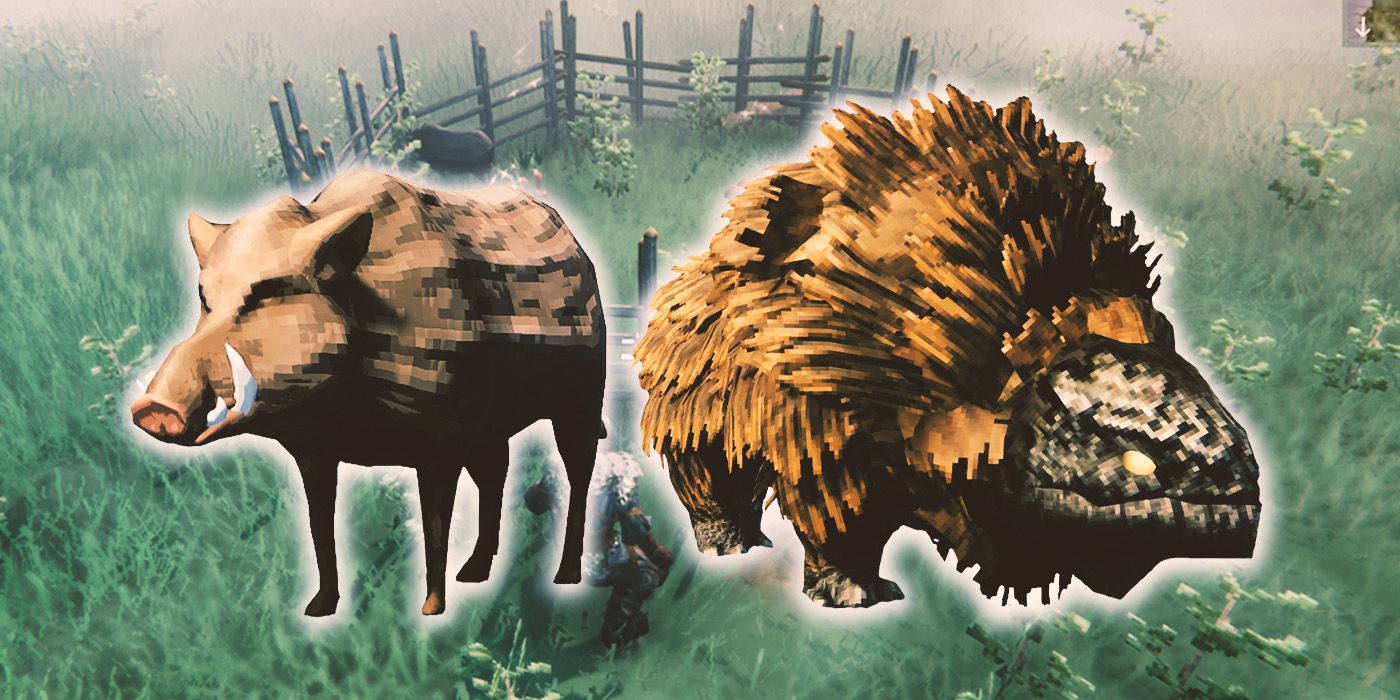
A farm full of Lox is all well and good, but the Ashlands update brings ten new enemies to Valheim, many of which are more powerful than anything else in the game. A select few of these can be tamed, and although it won't be easy, the rewards are well worth the effort. Whether a player is checking it out for the first time, or revisiting Valheim to see what's in the update, here's everything to know about its coolest new creature, and how to tame, breed, and farm it for the best possible results.
Related The Deadliest Enemy In Valheim's Ashlands Update Shown Off In Hilarious Video An unlucky Valheim player highlights one of the most deadly enemies included in the Ashlands update and it's not a typical monster or beast.
Valheim's New Asksvin Creature Has Many Benefits
Ride Them, Fight Alongside Them, Or Even Eat Them
Taming an Asksvin in Valheim can be difficult, but it's worth the effort because these unusual creatures have a wide variety of benefits. For one thing, players can saddle up and ride their tamed Asksvin. This requires crafting an Asksvin Saddle, which can be made at a level two forge with six Flametal, 20 linen threads, and four Morgen Sinew. Despite their two, admittedly somewhat stubby legs, Asksvin move pretty quickly on land, and can even swim across bodies of water, making them an excellent option for traveling across the Ashlands and beyond.
Besides that, once tamed, Asksvin will also come to the player's aid in combat. If they're out roaming with the player character, they'll attack any hostile creatures. If left back at base, they'll attempt to defend it against any and all intruders. They primarily attack by headbutting whatever's in front of them. However, that's not always a good thing. Asksvin will sometimes destroy structures around camp as collateral damage. They also make excellent escape artists. If they're left in an improperly built enclosure, they can quite easily get out and wreak havoc, especially if they're not yet fully tamed.
Finally, and not necessarily ideally, Asksvin can also be eaten. If it comes down to it, players can grill Asksvin tails at a cooking station for a half-decent meal. A cooked Asksvin tail increases the player's maximum HP by 70 and maximum stamina by 24 for a period of 20 minutes. It also restores six HP per tick, which equates to about two HP per second.
Related Valheim: How to Find (& Kill) Trolls Throughout the course of Valheim you might find yourself facing off against many creatures, including giant Trolls you can kill for valuable rewards.
Slaughtering Asksvin isn't always the best idea, though; there are more effective uses for them, so eating them seems like a bit of a waste. Still, with a proper, efficient taming and breeding program set up, players may find themselves with enough surplus to have their Asksvin and eat it, too.
Best Enclosures, Taming Requirements, & Hatching Procedures
Close
A fairly simple, easy-to-understand procedure for taming and breeding Asksvin is outlined in the following YouTube video by Kysen. First, it instructs the player to start building an Asksvin enclosure. However, thanks to their strong headbutts, Asksvin are prone to breaking through walls. Even if they're in a fenced-in area, they can also climb on top of each other and jump out. As a result, a pit works better for raising Asksvin than a pen. Just remember to leave a way in and out so that the first Asksvin can be lured inside.
With that done, the player will need to go out and find an Asksvin. There are three types, distinguished by their color and rarity. Normal Asksvin are a dark, muddy green, one-star Asksvin have a slightly bluer hue, and two-star Asksvin are deep purple. Once a player has found one, they can lead the Asksvin back by kiting it into the enclosure, then building a wall behind them, or harpooning it from within. Keep in mind, though, that the Asksvin will still be hostile at this point, and may try to attack the player through walls.
Related Valheim: How to Create Map Markers Markers for your map and various pings in Valheim can be created to help you remember certain locations as you travel across the massive open-world.
In Valheim, taming proceeds automatically over time as long as the creature has certain conditions met. An Asksvin must be inside the active area (within 64 meters of the player), out of combat, and well-fed to become tamed. Players will know the process has begun when they see yellow hearts emanating from their Asksvin. Asksvin taming progresses by one percent every 18 seconds, so it should take 30 minutes total as long as these conditions persist. They require feeding every ten minutes, which means they'll need at least three applicable food items (Smokepuffs, Fiddleheads, or Vineberries) to complete the process.
Players can also name their tamed creatures in Valheim.
Now, if two Asksvin are left in the same enclosure, tamed, and fed, they may spawn an egg. Asksvin eggs are pretty easy to hatch, as they have only one requirement: they must be kept near a fire to incubate. However, Kysen suggests it might be a good idea to build a roof over the fire and a fence around it, so that rain can't put it out and the Asksvin hatchlings won't walk directly into it as soon as they spawn.
All Valheim creatures come in one of three levels, represented by the number of stars next to their names. Asksvin deal an extra 50% damage, have an extra 100% HP, and drop twice as much loot per each level, so ideally, it's best to breed two-star Asksvin with each other whenever possible. Creature levels are hereditary, and breeding two Asksvin of a higher level is more likely to result in a high-level hatchling. The following table demonstrates how the likelihood of breeding different-level Asksvin depends on their parents' stats.
Asksvin #1 Level Asksvin #2 Level Hatchling Levels By Probability Zero-star Zero-star Zero-star (100%) One-star Zero-star Zero-star (50%)
One-star (50%) One-star One-star One-star (100%) Two-star Zero-star Zero-star (33%)
One-star (33%)
Two-star (33%) Two-star One-star One-star (50%)
Two-star (50%) Two-star Two-star Two-star (100%)
Armed with all this information, setting up an Asksvin breeding program is fairly straightforward, if not always easy. Still, it's definitely worth the effort, as Asksvin are among the most loyal and reliable animal companions a player can have. Players may not have everything they need for an Asksvin farm set up on their first day in the Ashlands update, but it can be an excellent long-term goal for devoted Valheim players.
Source: Kysen/YouTube







COMMENTS