Kingdom Of The Planet Of The Apes Director Reacts To Real Ape Intelligence Breakthrough
This article is part of a directory: Kingdom of the Planet of the Apes: Release Date, Cast, Story, Trailer & Everything We Know
Summary Scientists have captured footage of an ape using mashed leaves to make a medicinal pomace for a head wound.
Kingdom of the Planet of the Apes director Wes Ball reveals that this mirrors a deleted scene from his upcoming film.
The Planet of the Apes reboot trilogy does an effective job of charting the rapid evolution of apes as they rise to take over the world from humans.
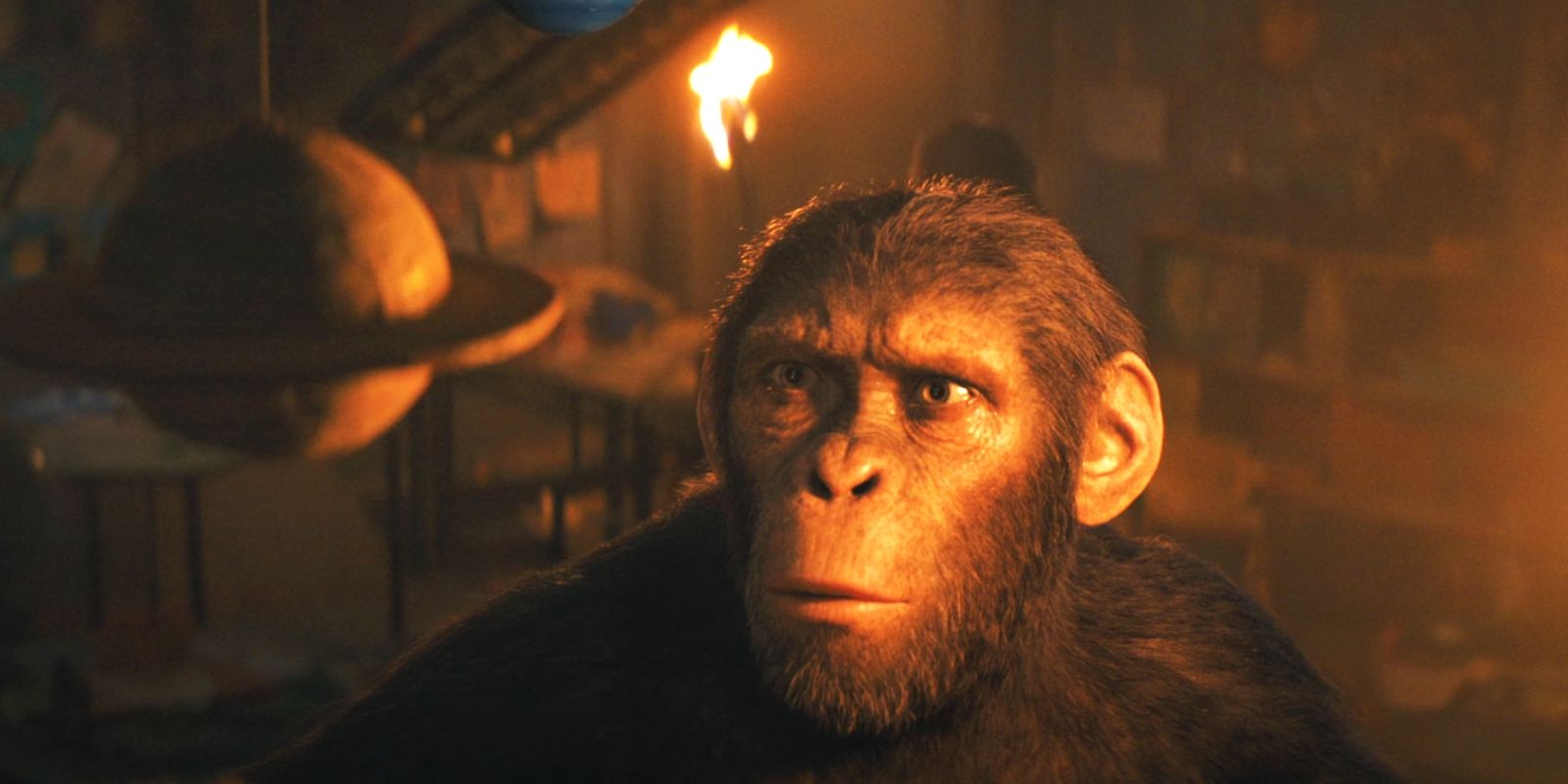
Kingdom of the Planet of the Apes director Wes Ball reacts to a wild discovery in the real world of apes and explains its connection to the movie. After the success of the Planet of the Apes reboot trilogy, which concluded in 2017, Ball's new installment in the decades-spanning franchise takes place hundreds of years after Caesar's death. The upcoming film follows Noa (Owen Teague), a young ape, and Mae (Freya Allan), one of the few remaining humans, as they join together for an epic journey that brings them into the path of the villainous Proximus Caesar (Kevin Durand).
Ahead of the Kingdom of the Planet of the Apes release date, Ball reacts to a real-life breakthrough regarding ape intelligence on X, formerly Twitter. The director shares a post from IGN about how scientists have captured footage of an ape using a pomace of mashed-up leaves as medicine for an open head wound. According to Ball, this actually mirrors a deleted scene from his upcoming film. Check out his post below:
"Wild because we had a scene we cut from the movie for time where Raka literally does this. It'll be on the deleted scenes though," Ball writes.
Related Planet Of The Apes Recap: 7 Details & Characters To Remember Before Kingdom Kingdom of the Planet of the Apes is set 300 years after the previous movie, but there are still some key details to remember before watching it.
Apes' Intelligence In Planet Of The Apes Explained
Ape Evolution Is One Of The Reboot Trilogy's Greatest Strengths
Close
2011's Rise of the Planet of the Apes documentes how a group of apes destined for scientific experimentation begins an independent society in a forest outside of San Francisco. This film, which was directed by Rupert Wyatt, features a crucial moment in which Caesar (Andy Serkis) speaks for the very first time. The next two films further explore the rapid evolution of these apes, showing how they build their own functioning society, use human weapons, ride horses, and gradually transition from the use of sign language to the spoken word.
The Kingdom of the Planet of the Apes cast also features William H. Macy, Dichen Lachman, Lydia Peckham, and Peter Macon.
This charting of the apes' evolution is actually one of the trilogy's underrated strengths, with various jumps forward in time showing the rise of one empire and the fall of another. The age of the human more or less ends in War for the Planet of the Apes in 2017, with humans shown to be suffering from the Simian Flu. This disease essentially reverts afflicted humans back to a more animalistic state, and it helps facilitate and accelerate the apes' rise to global dominance.
Your browser does not support the video tag.
Kingdom of the Planet of the Apes takes place in an age when few humans remain, and those who do survive can no longer speak. Apes have fully come to dominate the world in this new film, and they're closer to what humans were than ever before. They've even managed to create their own electricity-based weapons. It remains to be seen how apes will continue to evolve over potential sequels to Kingdom of the Planet of the Apes, but the latest ape discovery certainly comes at an interesting time for the hit franchise.
Source: Wes Ball/ X






COMMENTS