My Hero Academia’s Final Battle Lives Up to Expectations
Summary The Final War arc in My Hero Academia has redeemed the series' criticisms by delivering on long-promised conflicts and character arcs.
Supporting characters shine in the Final War, with key moments like Shinso's brainwash control and Tokoyami fighting alongside Hawks.
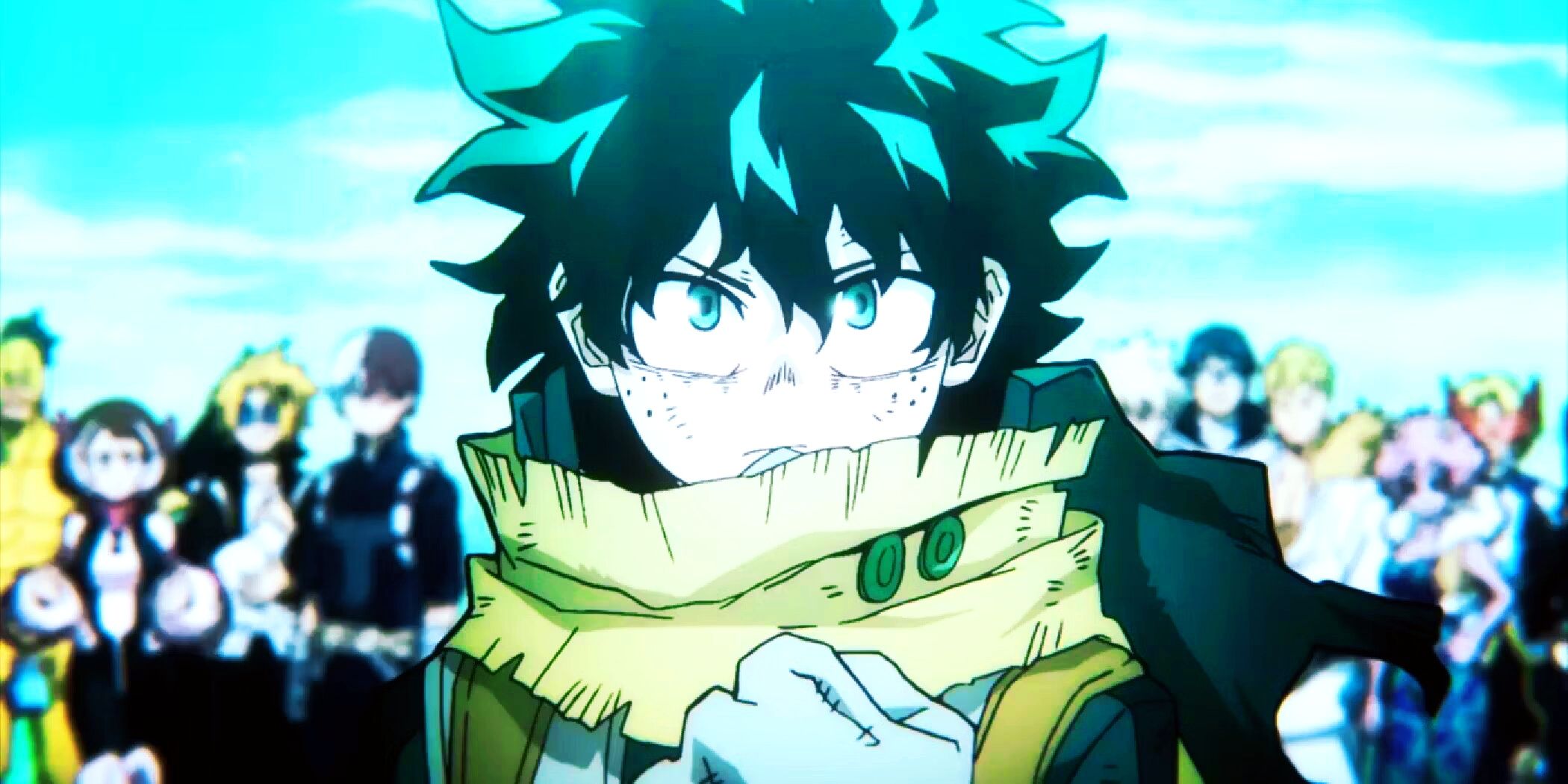
The final battle showcases Deku as a symbol of peace, highlighting the importance of teamwork and support in being a hero.
Warning: The following contains spoilers for My Hero Academia!!When the Final War arc in the My Hero Academia manga started unfolding, it faced criticism from fans for the narrative direction chosen. With a setup that reminds fans of the Fourth Great Ninja War in Naruto, and after compelling arcs like the Dark Hero arc and the Traitor arc, the Final War used the entire built-up of the MHA universe to make the clash between heroes and villains as big as possible.
The ongoing final battle has been long, running since chapter #343. Some critics claim that this has created pacing issues, but Horikoshi has done a good job at finishing up the different characters' arcs and emotional journeys of both the heroes and villains.
The Final War Arc in My Hero Academia has managed to redeem the series' previous issues, giving an incredibly satisfying outcome by delivering on conflicts that have been promised hundreds of chapters before, with amazing tension and back-to-back battles, making the final battle live up to fans' expectations and proving the critics wrong.
The Final Battle Finally Gives My Hero Academia’s Supporting Characters the Spotlight
The underrated villains Gentle and La Brava return to the story
Close
One of the biggest criticisms of the arc is the focus on supporting characters, because it distracts from the main fights. However, the Final War has given some characters the relevance they needed, like Shinso taking control over Gigantomachia with his brainwash, and Tokoyami fighting alongside his mentor Hawks, using Dark Shadow against All for One in one of the best moments in the series. The focus on students helping Pro-Heroes and fighting main villains adds to one of the important parts of MHA: how the students approach the responsibility of being a hero and the process of them surpassing the previous generation.
The arc also brought back unexpected characters to the heroes’ side, like Gentle Criminal, who joined the heroes at UA, and La Brava, who helped capture Skeptic. They assist in the battle against Shigaraki, and La Brava keeps the UA campus afloat alongside Gentle. Lady Nagant’s return, shooting at Shigaraki from the hospital, was also a key moment, saving everyone from Shigaraki’s decay. These former villains, by working with the heroes, reinforce another of MHA's themes: the hero's society is narrow-minded, but the heroes and villains are not completely black or white. Also, villains aren’t completely irredeemable.
The Multiple Battlefields in My Hero Academia’s War Enhance the Story
The different settings in MHA's battles contribute to the storytelling.
Close
Monoma copied Kurogiri’s quirk to split the villains into various portals at the beginning of the war. This decision divides the war across multiple battlefields, paralleling Shigaraki's first appearance during the U.S.J. Incident when Kurogiri’s warped Class 1-A and scattered them through different areas of the facility, where the League of Villains planned to ambush them. Also, the decision to face off with the villains in designated combat zones allows characters to be in their element, like Tsuyu, who is skilled in water and fought on Okuto Island.
The Final War has managed to make Deku a symbol of peace, not an invincible one like All Might, but one with weaknesses that resonate with people and make them want to support him.
Additionally, the different settings allowed delving deeper into other conflicts in MHA's universe, like the prejudice towards heteromorphs in society that unfolded during the assault on the Central Hospital by Spinner, and gave more backstory to the 1-A students, Shoji and Koda. Shoji and Koda understand the anger at being prejudiced for simply looking different. Also, Shoji was revealed to have faced discrimination as a child. This showed another dark side of quirk society, but also that the new generation of heroes have the resolve to fight the hate and help find peaceful solutions and mutual understanding.
The Final War Arc Stays True to My Hero Academia’s Main Message
Deku’s Effort Was Repayed by the Support of All the Heroes.
Close
An important point of the series is that Deku is different from All Might, who could fight without anyone's support. The Dark Hero Arc showed that Deku was seen as a threat by the population because of All for One, and needed the help of Class 1-A to be accepted by the public, proving that he can't be a hero on his own. However, in the Final War, Japan truly saw Deku and recognized him for all his heroic deeds, which is why all the heroes came together to support him in his last confrontation with AFO.
Young man, you too can become a Hero… when I saw this timid kid stepping up, it inspired me to act —All Might.
Deku has been rewarded for his efforts with the support of everyone behind him. Kaminari said that seeing Midoriya do his best was enough to make his body move. This quote has been repeated throughout the series. Bakugo said his body moved on its own to save Deku from Shigaraki during the Paranormal Liberation War. Deku said the same in the first chapter of the series when he ran to save Bakugo from the Sludge Villain. This reminds fans of the true essence of the series: running to save others. That’s why the last panel in chapter #421 shows Deku running.
The Final War has managed to make Deku a symbol of peace, not an invincible one like All Might, but one with weaknesses that resonate with people and make them want to support him, proving that Deku's greatest strength is not All For One but the way he inspires people. Horikoshi has maintained the true nature of My Hero Academia from the beginning to the current events of the war, which supports the main message of the story: no one can do it alone, and now, for the last clash, all the heroes will finally fight together to defeat All for One.




COMMENTS