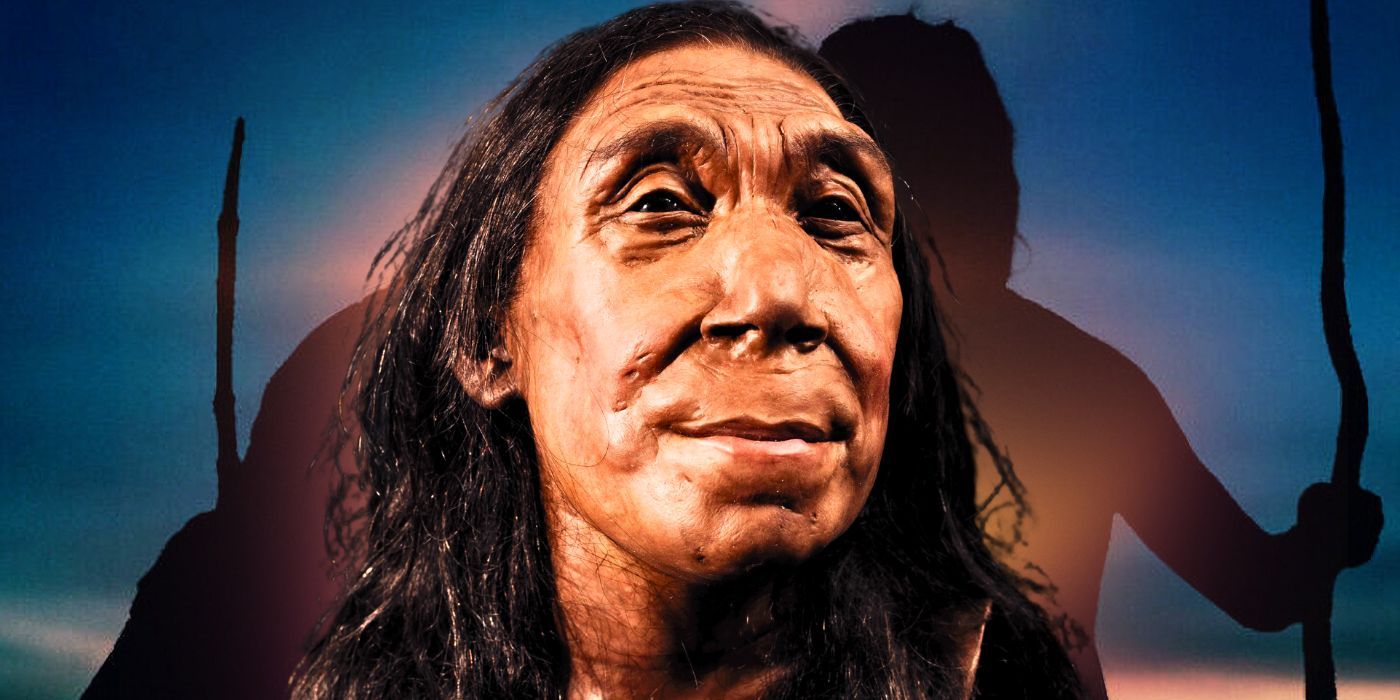
10 Biggest Reveals From Netflix's Secrets Of The Neanderthals Documentary
Summary New discoveries at Shanidar Cave challenge assumptions about Neanderthals' capability to form emotional bonds.
Shanidar Z, the oldest Neanderthal found in the cave, offers insights into their diet and intelligence.
The last Ice Age caused hunting problems and contributed to Neanderthals' extinction, as they faced competition with Homo Sapiens.
The Netflix documentary Secrets of the Neanderthals includes many big reveals about Neanderthals that, at the time of their discovery, challenged previous assumptions about how these prehistoric humans lived. Narrated by Patrick Stewart, Secrets of the Neanderthals follows multiple teams of archaeologists as they excavate key Neanderthal sites and discuss possible explanations for their findings. Experts posit new theories about Neanderthals' emotional bonds, burial practices, and religion.
This addition to the Netflix documentaries collection offers viewers a unique insight into the prehistoric world, their image of which has been characterized by widespread, incorrect assumptions. Stewart and the featured experts repeatedly address the presumed qualities of the Neanderthals of being less intelligent humans while stressing how many new findings contradict this. Many of the biggest reveals in Secrets of the Neanderthals will likely come as a surprise to the audience, as they did to the archaeologists who made these monumental findings.
Related New On Netflix: All 109 Movies & TV Shows Arriving In May May on Netflix is packed with new TV shows and movies including Archer, Bridgerton season 3, and Atlas.
10 Shanidar Cave Is An Important Archaeological Site But Hasn't Been Excavated In Years
Secrets of the Neanderthals focuses on an excavation site in Iraq.
Secrets of the Neanderthals centers around the excavation of the Shanidar Cave of the Zagros Mountains in northern Iraq.The documentary introduces Dr. Emma Pomeroy, who is part of a team of modern archaeologists to undertake an excavation in the cave for the first time since the 1960s. Pomery calls Shadinar Cave "hugely iconic" in the study of Neanderthals, broadening scientists' perspectives on what these ancient people were capable of.
The remains of 10 Neanderthals were first uncovered in the cave by a team led by Ralph Solecki beginning in the early 1950s. Solecki was one of the "world's great archaeologists" and "a great storyteller" who passionately painted pictures of the way Neanderthals lived based on his findings. Most of the studies detailed in Secrets of the Neanderthals are built upon Solecki's research.
9 Shanidar 1 & 3's Injuries Suggests Emotional Relationships Among Neanderthals
Two of the Shanidar individuals discovered by Solecki prompt fascinating revelations.
Close
However, both Neanderthals survived for some time after the injuries occurred. This is strong evidence that others around them cared for them due to an emotional bond.
Among Solecki's discoveries were the skeletons of two Neanderthals who died approximately 45,000 years ago, called Shanidar 1 and Shanidar 3. Both people sustained serious injuries that would have likely rendered them unable to care for themselves. Shanidar 1 had a head injury, an amputated limb, and some other broken bones. Shanidar 3 had a severe puncture wound to the abdomen.
However, both Neanderthals survived for some time after the injuries occurred. This is strong evidence that others around them cared for them due to an emotional bond. Shanidar 3's injury might have occurred during a fight between two people, suggesting some kind of rivalry — or it could have been a mere hunting accident. What is most important is that these discoveries are evidence that Neanderthal society included bonds between people as one would expect from familial relationships.
8 The Shanidar Neanderthals' Cannibalism Also Possibly Suggests Complex Thinking
Archaeologists believe Neanderthals' cannibalistic behaviors were less brutal than assumed.
Expert Davorka Radovčić compares the way flesh has been torn away from a Neanderthal leg bone to how people today eat meat from a chicken bone. While Radovčić admits that this revelation may initially be thought of as morbid, she argues that it could hold a deeper meaning. She wonders specifically why the Neanderthals may have eaten their dead when they had been established as people who would care for sick or injured family members.
Observations of the Krapina 3 skull and other bones housed in Croatia reveal many precise cut marks. Radovčić believes the cuts are too precise if the only purpose of scraping flesh away was to relieve hunger; she thinks too much care has been put into the task to be dismissed as having no emotional component. One of the theories Radovčić put forward is that eating a dead loved one was a ritual, so the person's best qualities would be retained by the living.
7 Shadinar 4 & The Flower Burial Theory Was Debunked But Legitimized Again
Solecki proposed the theory of Neanderthals having sentimental funerals.
Solecki also discovered Shadinar 4, a Neanderthal who was buried in a grave of flowers 75,000 years ago. Analyzing the variety of pollens unearthed from the grave, Solecki posited the theory that this was a Neanderthal burial ritual, where someone collected eight types of flowers to be buried with their loved one. However, this theory was debunked by the explanation that jirds, hamster-like creatures, tended to carry flowers with them when they burrowed into the ground.
Yet modern archaeologists still think Solecki was on the right track with his first, more romantic theory. Professor Chris Hunt argues that if the body had simply been abandoned, it would have been destroyed by predators. Yet Shadinar 4 is completely whole. It is possible that the plants were less decorative and more of a protective measure, so animals would not disturb the body. Either way, the revelation that Neanderthals cared for their dead has major implications.
6 Shanidar Z Is The Oldest Neanderthal Found At The Site Yet
A Neanderthal individual found in 2018 reveals more about Neanderthals' intelligence.
Archaeologists were thrilled to find Shanidar Z in 2018, which Stewart says is the first Neanderthal skeleton to be found anywhere in the world in a quarter of a century. Modern dating technology discovered that this Neanderthal person died approximately 75,000 years ago, making them the oldest person yet found in Shanidar Cave. The skeleton has been pressed to be "flat as a pancake"; its fragments were gathered and transported to the UK to be reassembled.
In addition to broadening the time scope of Shanidar Cave, Shanidar Z reveals more about Neanderthals' dietary habits and therefore their way of thinking. Examination of Shanidar Z's teeth reveals that it did consume some plants, which would have required the intelligence to determine which plants were edible or prepare them to be so. This is another discovery that has amazing implications for the Neanderthals.
5 The Bruniquel Cave Suggests A Neanderthal Religion
Structures found at the Bruniquel Cave may have had religious purposes.
Close
Meanwhile, a different team of archaeologists is busy excavating Bruniquel Cave in France. After making their way through a small crawl space, the archaeologists find many circular structures arranged in ways that they determine are not naturally occurring. Clusters of these structures are covered in ash remains, suggesting that they once served as a kind of hearth. The structures are dated to 176,500 years ago, a time when the Neanderthals were the only humans present on Earth.
Dr. Sophie Verheyden has the most to say about these discoveries and what they could mean in the documentary. She theorizes about the arrangements representing global imagery, drawing comparisons to the spiritual practices of Indigenous Americans. Relatively little can be determined about a possible Neanderthal religion from Bruniquel; only that it may have existed. Additional investigation into this subject would be extremely difficult, but possibly enlightening.
4 Shanidar Cave Is Possibly A Neanderthal Burial Ground
New discoveries at Shanidar Cave are evidence that it was specifically a place to bury the dead.
It again suggests a certain care and thought process Neanderthals had about death and the afterlife that previous researchers may not have believed they were capable of.
Pomeroy and the rest of the team of British archaeologists uncover another, nearly complete Neanderthal individual at Shanidar. What is fascinating about this skeleton is that it was buried in a cluster along with some of the previously discovered bones, including Shanidar 4 and Shanidar Z. Pomeroy is particularly excited about the implications of all these bodies being buried in one place.
It is possible that Neanderthal people returned to Shanidar Cave over decades or even millennia to bury their dead. It again suggests a certain care and thought process Neanderthals had about death and the afterlife that previous researchers may not have believed they were capable of. The newly discovered Neanderthal skeleton is notably buried close to Shanidar 4, whose "flower burial" represented another thought-provoking discovery about prehistoric burial practices. A stone placed near the buried bodies may even have been a grave marker.
3 The Ice Age Caused A Change In Diet For Neanderthals
An Ice Age 40,000 years ago meant many changes for Neanderthal life.
When the documentary begins to discuss how the Neanderthals went extinct, it addresses an Ice Age that happened some 40,000 years ago. This Ice Age would have lowered the sea level and resulted in different hunting and gathering grounds for the Neanderthals. Studies of Neanderthal remains from this time reveal that they consumed different food than earlier people, suggesting a change in diet.
This was more than likely due to climate change happening. These remains were discovered at the "Neanderthal city," a complex of caves in Gibraltar on the Mediterranean Sea, known as the Gorham Cave Complex. "Over the last 100,000 years of their existence, the world of the Neanderthals was constantly changing," says Dr. Clive Finlayson. They continued to adapt to the best of their ability but were eventually overwhelmed by the harsh new environment.
2 The Ice Age Caused Hunting Problems For Neanderthals
Drastic climate changes likely led to the extinction of Neanderthals.
Close
One of the biggest debates among the experts who study the Neanderthals is how they disappeared from existence when they apparently thrived for hundreds of thousands of years. The answer possibly lies in that same Ice Age that caused many drastic changes for all forms of life 40,000 years ago. Finlayson explains that the Ice Age did not only result in a colder climate but a dryer one, which meant many of the trees died out.
Previously, the Neanderthals were likely dependent on the trees for hunting. Perched in branches, they were able to attack larger animals from above. However, hunting on an open landscape was much more difficult as it gave animals the chance to flee. As it became more difficult to hunt, Neanderthals faced food shortages that would eventually spell their doom.
Related 15 Best Documentaries On Amazon Prime Right Now The best documentaries on Amazon Prime Video cover many different subjects, and most subscribers will find something intriguing on the platform.
1 Neanderthals Faced Competition From Homo Sapiens
Homo Sapiens are partially responsible for the Neanderthals' extinction.
Neanderthals were inevitably eventually replaced by the next stage in human evolution. Stewart narrates that as Homo Sapiens spread across the world, they likely would have encountered the remaining Neanderthals. This could have resulted in violent conflict or peaceful interactions. Either way, the increased competition for food would have contributed to the Neanderthals' struggle to survive.
Secrets of the Neanderthals is a succinct coverage of significant excavations and studies of Neanderthal life and culture which changed the field. Stewart and the experts stress that these discoveries lead to more questions about humanity as it is thought of today, and when it first existed. Another comparison included in the documentary is that the Neanderthals existed for longer than current humans have been on Earth. Ultimately, this documentary details many fascinating revelations that will change the way many people think about Neanderthals.






COMMENTS